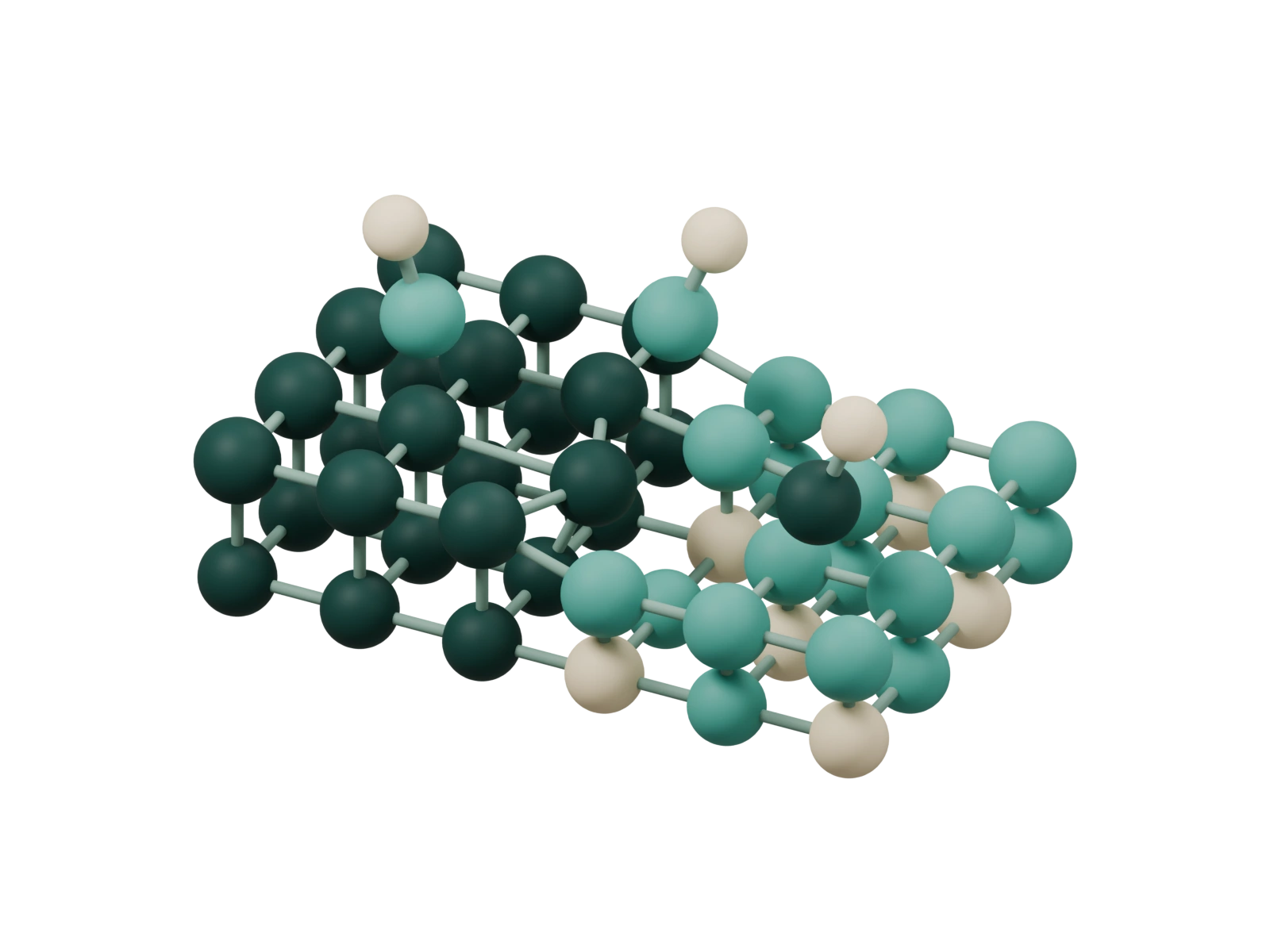
Catalysts can change their structure and composition as they interact with a reacting environment. Adsorbates compete for sites, surfaces reconstruct, and the populations of reactive intermediates evolve. We combine first-principles calculations, machine-learning potentials, advanced sampling and microkinetic modeling to understand these coupled processes.
Dynamic Active Sites
We study how the chemical environment selects and transforms catalytic structures. Global structure exploration and reactive atomistic modeling help identify candidate active sites beyond a single idealized surface. Our work on zinc-chromium oxides examines how structural and chemical changes influence syngas conversion.
Coverage and Reaction Kinetics
Reaction barriers alone do not determine catalytic performance. Surface populations, site competition and reaction-network connectivity all contribute to observed rates and selectivity. We develop and apply microkinetic models that account for coverage effects, with studies including acetylene hydrogenation on palladium and oxidation chemistry on metal surfaces.
Reactive Simulations of Complex Interfaces
Machine-learning potentials make it possible to explore larger sets of surface structures, adsorbate configurations and reaction pathways. We combine these models with molecular dynamics, grand-canonical sampling and targeted first-principles checks to investigate metal, oxide and metal–oxide environments. Current interests include connecting reconstruction, surface coverage and reaction kinetics within consistent simulation workflows.